
Distillery District Toronto: History, Food & Complete Guide (2026)
Tucked just east of downtown Toronto, the Distillery District is a cobblestone sanctuary that transports visitors straight back to the mid-19th century. Once home to the Gooderham and Worts Distillery—at one point the single largest producer of whiskey in the British Empire—this 13-acre historic enclave has been lovingly restored into one of North America’s finest pedestrian-only cultural hubs.
While many travelers know this neighborhood primarily for the magical Toronto Christmas Market, visiting only during the winter holidays leaves out the best part of the story. Throughout the spring, summer, and autumn, the district comes alive with sun-drenched restaurant patios, indie art galleries, live theater, craft distilleries, and open-air artisan markets.
Whether you are planning a romantic evening out to experience Toronto at night, seeking out the city’s finest bean-to-bar chocolate, or taking an architectural walking tour of Toronto’s must-see landmarks, this complete guide provides everything you need for an unforgettable visit.
A Brief History: From Grist Mill to Global Whiskey Titan
The story of the Distillery District began in 1832 when British brothers-in-law James Worts and William Gooderham built a brick windmill on the shore of Lake Ontario to mill wheat into flour. Recognizing a profitable opportunity to convert surplus grain into spirits, they established their first distilling apparatus in 1837.
By the 1870s, the Gooderham & Worts Distillery was producing more than 2 million gallons of whiskey and spirits annually—supplying nearly half of Ontario’s spirits and shipping Canadian whisky worldwide. The complex expanded to encompass over 40 brick and stone structures, featuring stone storage cellars, barrel rack houses, copper pot stills, and its own private rail spur.
Industrial changes and corporate mergers led to the decommissioning of distilling operations in 1990. Following years of preservation planning, the entire 13-acre site was declared a National Historic Site of Canada and reopened in 2003 as a car-free arts and culture village, preserving the largest and best-preserved collection of Victorian industrial architecture in North America.
Top Things to Do in the Distillery District
1. Wander the Cobblestone Pedestrian Streets
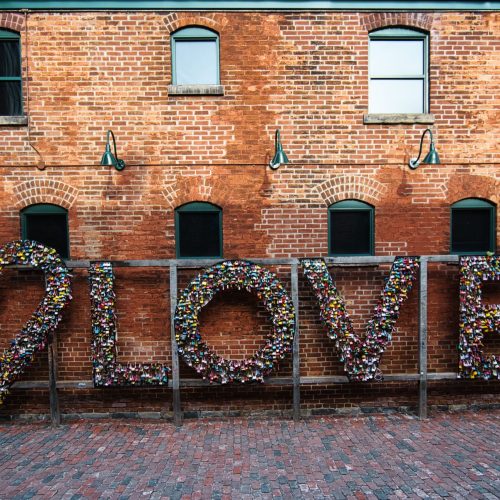
Unlike most of Toronto’s bustling urban core, the Distillery District is strictly closed to motor vehicles. The red-brick pavers, timber boardwalks, and historic rail tracks invite slow, leisurely strolling. Look for the famous Love Locks installation (where couples attach engraved padlocks) and the giant metallic peace sign and bronze spider sculptures scattered across the plazas.
2. Tour Spirit of York Distillery Co.
Distilling heritage lives on at Spirit of York, an operational craft distillery housed in the original 19th-century malting rooms. Visitors can watch the gleaming German copper pot stills through floor-to-ceiling glass, take guided tasting flights of small-batch rye whisky, botanical gin, and aquavit, and sip handcrafted cocktails in their dimly lit, aromatic tasting room.
3. Explore Local Art Galleries & Studios
The upper levels of the Case Goods Warehouse and the Cannery house dozens of independent artist studios, ceramics workshops, and contemporary galleries. Notable stops include:
- Arta Gallery: Showcasing contemporary paintings, sculptures, and mixed-media works by Canadian and international artists.
- Corkin Gallery: One of Canada’s premier contemporary art spaces, featuring cutting-edge photography and monumental installations.
- Distillery District Art Market: Hosted outdoors on select weekends during spring and summer, featuring local jewelers, printmakers, and craftspeople.
4. Catch Live Theater at the Young Centre
The Young Centre for the Performing Arts serves as the home base for the critically acclaimed Soulpepper Theatre Company and George Brown College’s theater school. The state-of-the-art multi-stage facility hosts Shakespearean revivals, contemporary Canadian plays, and jazz concerts year-round.
Where to Eat & Drink: Culinary Highlights
Toronto’s east-end culinary reputation is anchored right here. As highlighted in our review of Toronto’s best neighborhoods, the Distillery District offers a vibrant mix of casual eateries and destination dining:
| Venue | Cuisine / Style | Must-Order Specialty | Vibe & Setting |
|---|---|---|---|
| El Catrin Destileria | Modern Authentic Mexican | Smoked guacamole prepared tableside, Gobernador tacos, Mezcal cocktails | Gigantic heated year-round patio with fire pits and custom hand-painted Day of the Dead mural. |
| Cluny Bistro & Boulangerie | Modern French Brasserie | Duck confit poutine, steak frites, fresh butter croissants | Chic Parisian brasserie aesthetics with tiled mosaics, marble tables, and in-house French bakery. |
| Mill Street Brew Pub | Craft Beer & Gastropub | Original Organic Lager flight, fish & chips, soft pretzel bites | Housed in the original 1870s cooperage; perfect for casual pints and watching sports. |
| Madrina Bar y Tapas | Contemporary Spanish Tapas | Iberico ham croquetas, pan con tomate, seasonal paella | Vibrant Iberian tavern atmosphere with Michelin-recognized Basque and Catalan small plates. |
| Archeo | Italian / Event Dining | Handmade pasta, wood-fired pizza, house cured charcuterie | Rustic industrial charm with century-old exposed brick walls and reclaimed yellow-pine timbers. |
Much like the lively patio scenes explored in our guide to the best patios in Ossington Village, grabbing a table on Trinity Street on a warm July evening offers prime people-watching and infectious energy.

Artisan Boutiques & Sweet Spots
- Soma Chocolatemaker: An absolute mandatory stop for any food lover. Watch cacao beans being roasted and ground behind glass windows. Order a shot of their fiery Mayan drinking chocolate (infused with chili, ginger, and Madagascar vanilla), pick up a bar of single-origin dark chocolate, or cool off with a scoop of seasonal artisan gelato.
- Balzac’s Coffee Roasters: Located inside the historic 1895 pump house, Balzac’s features a soaring two-story ceiling, a giant brass chandelier, and a Parisian cafe ambiance. Their slow-roasted Fair Trade coffee makes it one of the city’s most atmospheric remote-work and reading spots.
- Blackbird Vintage Finds: A treasure trove of antique brass decor, botanical prints, vintage apothecary jars, and curated Canadian curiosities.
- John Fluevog Shoes: Designer shoe boutique housed in an eccentric heritage space with custom footwear, vintage display cabinets, and whimsical British flair.
Self-Guided Heritage Walking Route (90-Minute Itinerary)
If you have limited time and want to incorporate the district into a broader Toronto downtown day tour, follow this efficient walking route:
- Step 1 – Main Entrance (Mill St & Trinity St): Enter through the historic gateway on Mill Street. Grab a morning espresso at Balzac’s and admire the 1895 pump house brickwork.
- Step 2 – G&W Stone Distillery (Building 5): Walk south down Trinity Street. Look up at the massive limestone foundations quarried from Kingston, Ontario in 1859.
- Step 3 – Love Locks Sculpture: Stop at the steel “LOVE” sign in the central plaza. If traveling with a partner, snap a photo or add your own lock.
- Step 4 – The Pure Spirits Building: Wander west toward the 1873 Pure Spirits warehouse, passing the towering industrial chimneys and copper piping overhead.
- Step 5 – Soma Chocolate Pitstop: Step into Soma to sample small-batch truffles and sip their legendary spiced drinking chocolate.
- Step 6 – Spirit of York & Young Centre: Head east toward Tank House Lane. Peer through the distillery windows at the copper pot stills and browse ongoing gallery exhibits.
- Step 7 – Patio Dinner at El Catrin or Cluny: Conclude your walk with dinner and drinks on the heated patio beneath string lights as twilight sets in.
Getting There: Transit & Parking Logistics
Local Transit Tip: Driving into the Distillery District on weekends is notoriously frustrating and parking rates can reach $25 to $35 during festival seasons. We strongly recommend taking public transit or riding a bicycle.
By Public Transit (TTC)
- From Union Station / King Station: Hop on the 504 King Streetcar (Eastbound) and get off at Parliament Street. Walk two blocks south down Parliament to Mill Street (approx. 4-minute walk).
- From Castle Frank Station: Take the 65 Parliament Bus southbound directly to Parliament & Front Street, then walk one block south.
- Walking from St. Lawrence Market: The Distillery District is just an easy 12-minute walk east from St. Lawrence Market along Front Street East.
By Bike Share & Active Transit
Toronto’s Bike Share Toronto system has major docking stations right at Mill Street & Parliament Street and at Distillery Lane. The district connects directly to the Martin Goodman Trail along the lakefront via the Parliament Street bike lanes.
Best Times to Visit: Seasonal Guide
| Season | What to Expect | Key Highlights |
|---|---|---|
| Spring (April – June) | Mild weather, blooming planter boxes, quiet weekday mornings. | Outdoor patios reopen; gallery art walks; manageable crowd levels. |
| Summer (July – August) | Bustling pedestrian atmosphere, street buskers, sunny weekend energy. | Craft beer festivals, late-night patio dining at El Catrin, outdoor artisan markets. |
| Fall (September – October) | Crisp autumn air, golden leaves against red-brick facades, cozy cafe vibes. | Warm apple cider at Balzac’s, Soulpepper autumn theater season, stunning photography. |
| Winter (November – December) | Festive fairy lights, towering 50-foot Christmas tree, holiday vendor wooden cabins. | The iconic Toronto Christmas Market (Winter Village). Advance tickets required on weekend evenings. |
Frequently Asked Questions (FAQs)
Is there an admission fee to enter the Distillery District?
No. The Distillery District is a public, open-air commercial and residential neighborhood that is completely free to enter 365 days a year. The only exception is during the winter holiday season on select Friday, Saturday, and Sunday evenings when the Winter Village requires paid admission tickets to manage crowd capacity.
Are dogs allowed in the Distillery District?
Yes! The Distillery District is exceptionally dog-friendly. Leashed pets are welcome throughout all outdoor pedestrian streets, and many restaurants with outdoor patios accommodate well-behaved dogs.
How much time should I spend at the Distillery District?
Plan for roughly 2 to 3 hours for a relaxed visit that includes a walking tour, browsing the galleries and boutiques, and grabbing a coffee or chocolate treat. If you plan to sit down for dinner and drinks or catch a theatrical performance at the Young Centre, expect to spend 4 to 5 hours.
Is the Distillery District wheelchair and stroller accessible?
Yes. Although the streets are paved with historic cobblestones and bricks, smooth leveled pathways and concrete curb cuts have been integrated throughout the district. All major restaurants, galleries, and washrooms offer ground-floor step-free access.
